 Al het nieuws
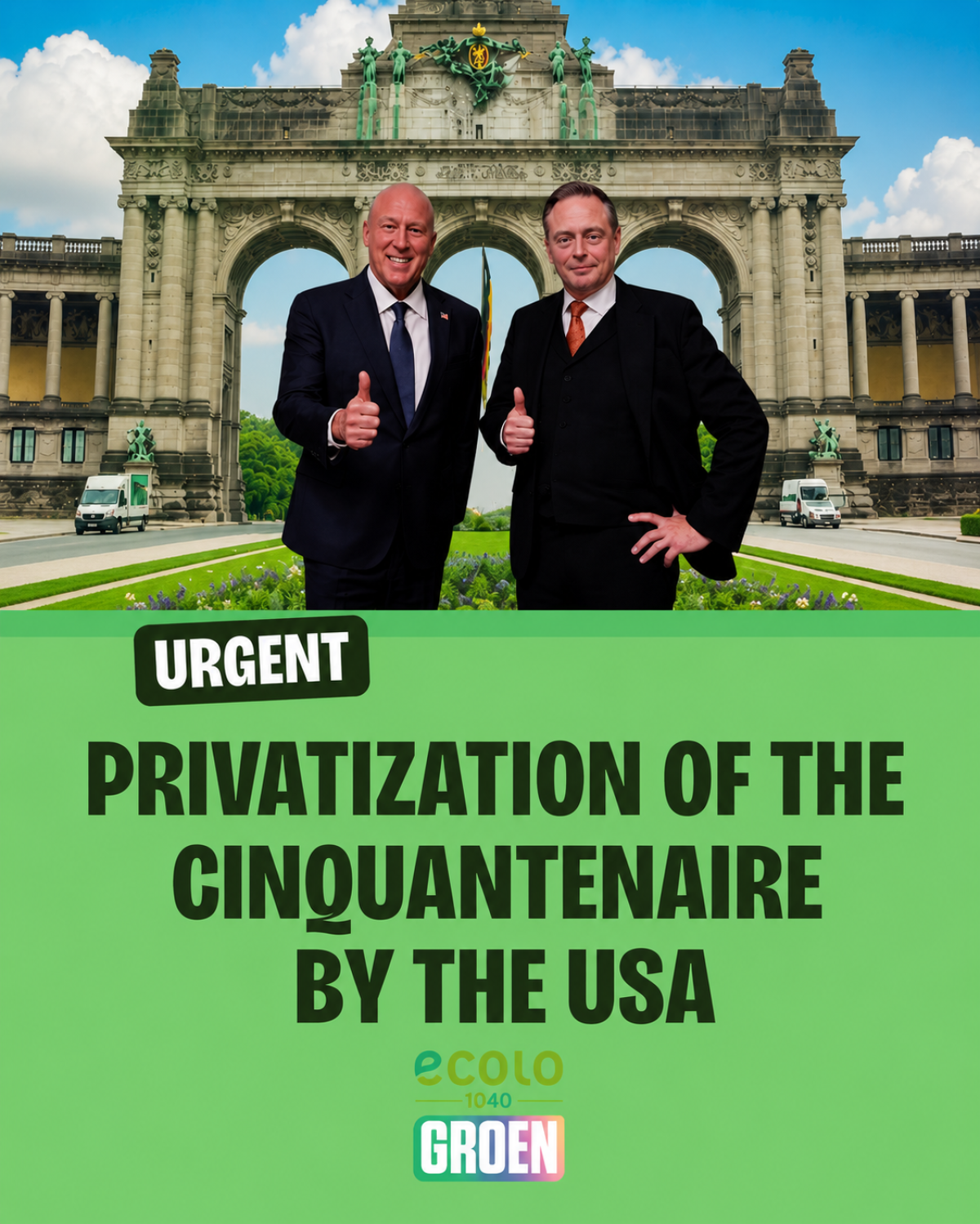
PRIVATIZATION OF THE CINQUANTENAIRE BY THE USA: TOO MUCH UNCERTAINTY, NOT ENOUGH ANSWERS


To this day, many questions remain unanswered, as already raised during the municipal council meeting of May 18 in the context of our interpellation concerning the events planned on June 28 at the Cinquantenaire for the 250th anniversary of the United States.
At that time, the City of Brussels had already referred, in a note regarding public order and events, to police zone approval for restrictions that could last up to 10 days around the park.
Yet publicly, the mayor of Etterbeek still claims “one or two days of closure, no more,” while simultaneously stating during the municipal council meeting that he was unaware of these elements and would align with the City of Brussels.
These contradictions are unacceptable when it comes to a major public park, at the heart of decisions involving the City, the police, and other authorities.
In reality, several documents and press reports describe a very different situation: a period of controls and restrictions potentially lasting 10 to 12 days, a partial closure of the park between June 21 and July 2, as well as access control measures entrusted to private actors.
There is also talk of an event of exceptional scale: thousands of invited guests, Belgian and European political leaders, reinforced security measures, aircraft flyovers and a 30-minute fireworks display, as well as a concert, partial occupation of the site and the closure of museums for private purposes — all potentially subject to controls carried out by a private company mandated by the United States.
The Cinquantenaire Park, one of the main green lungs of Etterbeek and Brussels, thus finds itself at the center of an operation with direct impacts on local residents, but also on the park itself, its biodiversity and the wildlife living there.
The disturbances linked to such a concentration of events are far from insignificant: intense noise, stress for the animals living in the park (birds, bats, small mammals), and lasting disruption of already fragile urban ecosystems.
This celebration is also the subject of strong controversy. Two weeks ago, several associations, at the initiative of Extinction Rebellion, sent an open letter to the Mayor of Brussels and Brussels Environment asking them to refuse the permit requested by the United States Embassy. They notably denounce the disproportionate nature of the event at a time when “the number of people living in poverty is increasing exponentially,” considering that this lavish celebration constitutes “a final blow to all those who consider Brussels and Europe their home.”
And yet, the political response remains vague, somewhere between “nothing official” and “it has not yet been decided,” even though concrete elements already exist in documents and discussions.
In a recent interview, the mayor of Etterbeek also stated that the municipality “has no choice,” as the decision falls under federal and diplomatic authority. Local authorities would therefore merely be expected to manage security and the consequences, accepting that this is simply “part of being a capital city.”
We do not share this interpretation.
This political fatalism is not acceptable.
On the ground, uncertainty still prevails: “perhaps a family village, perhaps a concert, perhaps fireworks,” with decisions continually postponed.
Therefore, one question remains and must be clarified: either the mayor of Etterbeek has not been fully informed of all the elements discussed between the authorities, or this information is being deliberately minimized in the public debate and redirected to the press, without sufficient transparency toward the municipal council and residents.
In all cases, this situation is not acceptable in a local democracy.
Meanwhile, no clear answers are being provided regarding the concrete impacts on residents: restricted access, disturbances, disrupted traffic in an already heavily congested neighborhood, nor regarding the costs for the community or the financial responsibility of the organizers.
The fundamental question remains: how can such a major occupation of a public park be organized without transparency, without effective local democratic oversight, and without providing full information to residents?
Saying “we have no choice” cannot become an excuse for failing to inform, failing to anticipate, and failing to defend the interests of residents.
As the Ecolo-Groen Etterbeek group, we clearly reaffirm our position: the Cinquantenaire is not a diplomatic backdrop. It is a public park at the heart of a living neighborhood, deserving transparency, consistency and respect.